Transition IEP
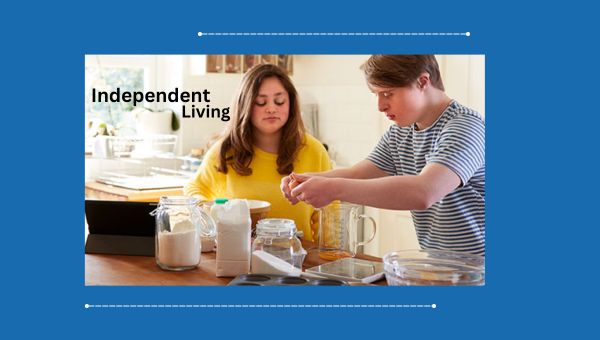
As teens approach adulthood, living independently becomes a significant goal. Independent living skills or tasks are those related to daily living and may include housing, personal care, transportation, and social and/or recreational opportunities. Each student’s needs in the area of independent living are unique and should be determined through formal and informal age-appropriate transitional assessments.
Alternatives to Guardianship
South Dakota Law States:
- An individual becomes an adult at age 18.
- At that time, they will be responsible for making their own decisions no matter how significant their disability is.
- Parents/Guardians will lose their right to make decisions on the child’s behalf.
If an individual will be in need of assistance in making decisions, families need to plan ahead before the person turns 18. There are many options when considering helping someone with decisions after their 18th birthday. It is best to allow a young adult to keep as many rights as possible.
For More Information:
- SD Guardianship Program – (605) 224-9647
- Disability Rights SD – (800) 658-4782
- SD Parent Connection – (800) 640-4553
Options Available:
Supported Decision Making (SDM): The process of assisting persons with a disability to make their own decisions, so they can develop and pursue their own goals, make choices about their adult life, and exercise some control over the things that are important to them.
Representative Payee: Another individual act as the receiver of the United States Social Security Disability or Supplemental Security Income for a person who is not fully capable of managing their own benefits.
Power of Attorney: This option doesn’t require a court hearing. This option consists of a notarized document with specific reasons (medical, financial, etc.) stated, doesn’t require a court hearing, and the person with the disability retains authority to make decisions.
Limited Guardianship: Provides a guardian with decision-making authority and responsibility over only selected areas that the person has been determined by the court as unable to manage. For example, limited guardianship might only apply to health care decisions.
Conservatorship: An individual is appointed with decision-making authority to manage, protect, and preserve the protected person’s estate and finances.
Social Security Benefits
As youth move into adult life, it is important to be aware of the changes and supports available. This is true with everyone, but especially with youth who receive disability cash benefits from Social Security Administration. SS Benefits & Youth in Transition Training is available from Transition Liaisons upon request.
- ABLE Accounts (Achieving Better Life Experiences) – Learn what they are, what the funds in an ABLE account can be used for, and where to set up an ABLE account during this 60-minute webinar presented by an SD Benefits Specialist and a financial planner.
- SSI Fast Facts
- What are the eligibility requirements to get Social Security disability benefits?
- Can I return to work while getting Social Security disability benefits?
- Can children with disabilities get Social Security benefits?
- How do I apply for Social Security disability benefits?
South Dakota Benefits Specialist Network
People with disabilities who want to learn about their disability benefits, and who are already working or ready to enter the workforce, can contact a Benefits Specialist to learn about benefits: Medicare, Medicaid, reporting income, and anything else related to working and managing benefits.
Developmental Disability Programs
The mission of the Division of Developmental Disabilities (DDD) is to ensure that people with developmental disabilities have equal opportunities and receive the services and supports they need to live and work in South Dakota communities.
The Division of Developmental Disabilities offers a wide array of services from intermittent support in a person’s home to around-the-clock care. All services are offered with the goal of supporting people to live as independently as possible and supporting their health and safety needs.
Service Options Available:
CHOICES Waiver – Community, Hope, Opportunity, Independence, Careers, Empowerment, Success (CHOICES) is a program with services for children and adults with intellectual and developmental disabilities.
Services may include:
- Individual Assistive Technology
- Residential Services
- Supported Employment Individual & Group
- Career Exploration
- Day Services
- Small Group Vocational Support
- Specialized Medical Equipment and Drugs
- Case Management
Conflict-Free Case Management – Each person seeking CHOICES waiver services selects a case management provider as their first step. Your case management provider cannot be the same as your service provider. This is to ensure you get an unbiased plan that meets your needs. The case manager will help:
- Gather and send required proof to determine if a person qualifies
- Make a high quality, person-centered plan for supports and services
- Identify, apply for, and access the supports the person needs and wants from available providers and resources
- Advocate and problem solve
Community Support Providers (CSP) – A community service provider (CSP) provides direct services to people supported by the CHOICES waiver. There are 21 CSPs in South Dakota which provide residential, employment, and nursing care in a variety of settings.
Family Support 360 (FS 360) – Family Support 360 (FS 360) helps people with intellectual and developmental disabilities and their families get the services they need to live in their own home and community as independently as possible.
FS 360 is self-directed, which allows the person or their guardian to choose their staff and schedule based on their needs.
Services may include:
- Support Coordination
- Respite Care
- Companion Care
- Personal Care
- Supported Employment
- Vehicle Modification
- Specialized Medical Adaptive Equipment and Supplies
- Environmental Accessibility
- Specialized Therapies
Shared Living – Shared living is a residential living option where a person with an intellectual or developmental disability lives with someone who wants to share a life and provide supports. The shared living provider can be anyone over the age of 18. Shared living Host Home and Companion Home providers are very diverse and can include college students, families, single people, couples, and empty nesters.
- Host Homes provide services to a person in the private home of a community member, friend, or family member.
For More Information:
Dakota at Home: 1-833-663-9673, choose Option 2
or e-mail DD**************@******sd.us
Independent Living Services
People with disabilities can get Independent Living services to help them live on their own in their own homes and communities. Services are provided through Centers for Independent Living in South Dakota.
Who Is Eligible?
Any person who lives in South Dakota and has:
- A physical, mental, cognitive, or sensory impairment
- Limited ability to live independently in their home or community
- Limited ability to get, keep, or advance in a job
- Ability to live or move toward living independently in their home or community, or in a job, with the support of Independent Living services
Services:
People who qualify may get these services:
- Information and Referral Services: People can learn about their rights, resources, and responsibilities related to a disability. These services are not based on economic need.
- Independent Living Skills Training: People learn basic life skills for independent living like food preparation, shopping, and personal grooming. These services are not based on economic need.
- Peer Counseling Services: People can get peer counseling services from a person with a similar disability. The peer counselor and person meet one-to-one or with a group of peers to talk about issues related to their disability. These services are not based on economic need.
- Individual and Systems Advocacy: Individual advocacy services help a person develop the skills they need to advocate for themselves in daily life. Systems advocacy promotes community-wide change for the full inclusion of people with disabilities in society. These services are not based on economic need.
- Transition Services: People can get help to stay in their home, return to their home and community from a nursing facility or institution, or transition from high school to life after high school. These services are not based on economic need.
- Assistive Technology: Our programs provide devices and equipment to help people with disabilities communicate.
How to Apply:
- Meet with an independent living specialist in your area to discuss your disability and independent living needs. If available, bring medical information about your disability or proof that you get an SSI or SSDI check.
- Set goals with your independent living specialist. The time it takes to reach your independent living goal depends upon your personal needs.
Contact Information for Centers for Independent Living in South Dakota:
Western Resources for Independent Living (WRIL)
- Address:
909 E Saint Patrick St STE #4
Rapid City, SD 57701 - Phone: 605-718-1930 or 888-434-4943
- Website: http://www.wril.org
Counties served: Pennington, Meade, Lawrence, Butte, Custer, Fall River, Stanley, Sully, Hughes, Jones, Lyman, Mellette, Tripp, Harding, Perkins, Haakon, northern Jackson
Independent Living Choices (ILC)
- Address:
4107 S Carnegie Circle
Sioux Falls, SD 57106 - Phone: 605-362-3550
- Website: www.ilcchoices.org
Counties served: Aurora, Beadle, Bon Homme, Brookings, Brown, Brule, Buffalo, Campbell, Charles Mix, Clark, Clay, Codington, Davison, Day, Deuel, Douglas, Edmunds, Faulk, Grant, Gregory, Hamlin, Hand, Hanson, Hutchinson, Hyde, Jerauld, Kingsbury, Lake, Lincoln, Marshall, McCook, McPherson, Miner, Minnehaha, Moody, Potter, Roberts, Sanborn, Spink, Turner, Union, Walworth, Yankton